
On May 24, Kellogg Sales Co. defeated a third putative class action alleging that Strawberry Pop-Tarts mislead consumers, having defeated two other putative class actions in March. Represented by prolific plaintiffs’ firm, Sheehan & Associates, Stacy Chiappetta, Kelvin Brown, and Anita Harris each sued Kellogg after realizing that the filling in Strawberry Pop-Tarts contains not just strawberries, but also small amounts of dried pears, dried apples, and the food dye red 40. But two federal judges in Illinois and a third in New York have now agreed with Kellogg that the packaging of Strawberry Pop-Tarts is not misleading for the simple reason that the pastries in fact contain strawberries.
Continue Reading Kellogg Beats Pop-Tarts Class ActionsConsumer Survey Did Not Constitute Common Proof of Deception or Materiality
The Southern District of California recently declined to certify a class based on plaintiffs’ failure to offer class wide proof of deception and materiality. In Gross et al. v. Vilore Foods Company, Inc., plaintiffs alleged that Kern fruit juice products were deceptively labeled as “100% Natural” or made with whole fruit when the drinks in fact contained artificial ingredients. Plaintiffs brought claims under various California laws, including the UCL, CLRA, and FAL. To certify a class, plaintiffs were required to offer common proof both that the challenged representations were deceptive or misleading to a reasonable consumer; and that the challenged representations were material, meaning a reasonable person would attach importance to the representations that Kern’s fruit juice is “100% natural” or made with whole fruit. The court held that plaintiffs satisfied neither burden.
First, as to deception, the only evidence Plaintiffs cited was their expert’s report. Plaintiffs’ expert purported to assess the importance consumers placed on certain product attributes, and how claims such as “artificially flavored” affected their willingness to pay for a product. Plaintiffs’ expert concluded that consumers were willing to pay approximately 29% more for a Kern product that did not disclose its use of artificial flavors, and approximately 30% less for a product disclosing that it contained artificial flavors. The court found this evidence insufficient because consumers’ willingness to pay more or less for a product said nothing about whether the labels at issue would lead consumers to believe that the products did not contain artificial flavors, or contained only natural flavors. As a result, the court held that Plaintiffs’ expert’s opinion could not constitute common proof of deception.
Continue Reading Consumer Survey Did Not Constitute Common Proof of Deception or MaterialityDryers Wins Back-to-Back Dismissals in Consumer Deception Lawsuits
Last week, Dryers defeated two putative class actions filed by the same law firm, Spencer Sheehan, alleging that representations on the packaging of Häagen-Dazs chocolate-dipped ice cream bars misled consumers about the product’s chocolate coating. In both cases, plaintiffs alleged that the representation that the ice cream is dipped in “rich milk chocolate” is false, since the addition of vegetable and coconut oil to the chocolate coating “fundamentally changes the nature of the bar’s coating.” According to plaintiffs, chocolate is “a food prepared from ground roasted cacao beans,” that are ground to produce cocoa mass or chocolate liquor and then combined with dairy ingredients, sweetener, and flavorings—not vegetable oil. Plaintiffs also pointed to FDA regulations defining chocolate and related labeling requirements to argue that food companies may not market their products as chocolate when they are mixed with non-cacao plant oils.
Dryers filed motions to dismiss both cases, and the Southern District of New York and the Southern District of Illinois granted the motions, but on different grounds. While S.D.N.Y. held that no reasonable consumer would be misled by the product packaging, S.D. Ill. concluded that the Federal Food Drug and Cosmetic Act preempted the state claims at issue. Neither court found the plaintiffs’ appeals to FDA regulations availing.
Continue Reading Dryers Wins Back-to-Back Dismissals in Consumer Deception Lawsuits9th Circuit Upholds Preliminary Injunction Against Prop. 65 Acrylamide Lawsuits
In a major victory for manufacturers of food and beverage products fighting acrylamide litigation under California’s Proposition 65 statute, the Ninth Circuit on March 17 upheld a preliminary injunction barring new lawsuits to enforce Prop. 65’s warning requirement for cancer as applied to acrylamide in food and beverage products, finding that the statute’s compulsory warnings are “likely misleading” and “controversial.”
Prop. 65 provides that “[n]o person in the course of doing business shall knowingly and intentionally expose any individual to a chemical known to the state to cause cancer . . . without first giving clear and reasonable warning to such individual, except as provided in Section 25249.10.” Cal. Health & Safety Code § 25249.6. In October 2019, California Chamber of Commerce (“CalChamber”) filed suit for declaratory and injunctive relief against the Attorney General of California, seeking to halt acrylamide litigation brought under Prop. 65. It argued that Prop. 65’s warning requirement violated its members’ First Amendment right not to be compelled to place “false and misleading” acrylamide warnings on their food products. Acrylamide is often found in baked or fried foods, and has also been identified in products like coffee, almonds and black olives.
CalChamber further moved for a preliminary injunction seeking a prohibition on new lawsuits to enforce the Prop. 65 warning requirement for cancer as applied to acrylamide in food and beverage products. The Council for Education and Research on Toxics (“CERT”) intervened as a defendant and argued that, as a private enforcer of Prop. 65, an injunction would “impose an unconstitutional prior restraint on its First Amendment rights.”
Continue Reading 9th Circuit Upholds Preliminary Injunction Against Prop. 65 Acrylamide LawsuitsA Closer Look: D.C. Court of Appeals Endorses Broad Organizational Standing to Bring Consumer Protection Lawsuits
We previously reported on a surge of mislabeling suits filed in District of Columbia Superior Court, following lower court decisions that purported to grant “tester” plaintiffs—individuals and organizations that purchase products simply to test whether the representations about a product are true—a right to sue on behalf of the general public under the District of Columbia Consumer Protection Procedures Act (“CPPA”). A year later, the District of Columbia Court of Appeals has endorsed an even more expansive interpretation of the CPPA, permitting a public interest organization to bring such actions even if the organization fails to satisfy Article III’s standing requirements. We expect even more lawsuits to be filed in the wake of this decision.
Continue Reading A Closer Look: D.C. Court of Appeals Endorses Broad Organizational Standing to Bring Consumer Protection LawsuitsTenth Circuit Rules Pet Owners’ Class-Action Bark Has No Bite
This week was ruff for a group of pet owners whose putative mislabeling class action against Champion Petfoods USA, Inc. was unanimously rejected by the Tenth Circuit. In Renfro v. Champion Petfoods USA, Inc., No. 20-1274 (10th Cir. Feb. 15, 2022), the Tenth Circuit affirmed dismissal of the plaintiffs’ claims alleging affirmative misrepresentations and omissions about the quality and/or ingredients of Champion’s dog food. In so affirming, the Tenth Circuit held that general statements like “Trusted Everywhere” and “Biologically Appropriate” would not deceive or mislead reasonable consumers.
Continue Reading Tenth Circuit Rules Pet Owners’ Class-Action Bark Has No BiteSecond Court Upholds Industry-Standard Method for Calculating Front-of-Pack Protein Content Claims
As discussed in our recent post, a court in the Northern District of California recently dismissed a complaint against Kashi involving its front-of-pack protein content claims. See Nacarino v. Kashi Co., No. 21-CV-07036-VC, 2022 WL 390815, at *1 (N.D. Cal. Feb. 9, 2022). That decision confirmed that food manufacturers may use the “nitrogen method” to calculate protein content claims made outside the Nutrition Facts Label and that plaintiffs’ theory that manufacturers must adjust such claims to reflect protein digestibility is preempted. Judge Seeborg, also of the Northern District of California, followed in the footsteps of the Kashi court on February 15 by dismissing with prejudice a virtually identical case against KIND. See Chong v. KIND LLC, No. 21-CV-04528-RS, 2022 WL 464149 (N.D. Cal. Feb. 15, 2022).
Continue Reading Second Court Upholds Industry-Standard Method for Calculating Front-of-Pack Protein Content ClaimsA Closer Look: Court Upholds Industry-Standard Method for Calculating Front-of-Pack Protein Content Claims
Background
Many food companies now make quantitative protein content claims on the front of pack or elsewhere on their product labels outside the Nutrition Facts Label (NFL), such as the example from a recent case below:
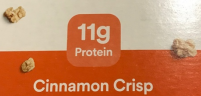
FDA regulations direct manufacturers to use the “nitrogen method”—which generally calculates protein content by multiplying the nitrogen content of the food by 6.25—when calculating the amount of protein reported inside the NFL. Companies have generally used the same method for protein claims made elsewhere on the label, i.e., outside the NFL.
Continue Reading A Closer Look: Court Upholds Industry-Standard Method for Calculating Front-of-Pack Protein Content Claims“Just Fruit” Does Not Mean Only Unprocessed Fruit
Last week, in Vitort v. The Kroger Co., No. 3:20-cv-01317-AC, 2022 U.S. Dist. LEXIS 18291 (D. Or. Feb. 1, 2022), the District of Oregon dismissed a putative class action claiming that a blackberry spreadable fruit product labeled “Just Fruit” misleads consumers into believing it contains only blackberry fruit, when its primary ingredient is fruit syrup with significant added sugars and other additives. Defendants argued the product’s label is accurate because all of its ingredients—including the sugar—are derived from fruit.
Continue Reading “Just Fruit” Does Not Mean Only Unprocessed Fruit